

A small institute. One question.
The Institute for Human and Artificial Work is an independent, non-profit research initiative founded in Madrid in 2026. Its present subject is a single question: when work is done by people and AI agents together, who is responsible for the whole workforce, and should organisations create a Chief Workforce Officer to answer for it?
Vision
Every organisation that gives real work to AI agents will have one person accountable for the whole workforce, human and artificial, and the role will be as ordinary as a chief financial officer is today.
Work is now done by people and agents together, and no one owns the consequence. The decision about which work agents do is made by whoever controls a software budget. The cost of checking their work falls on people who were never asked. The entry-level roles that produce tomorrow's experts quietly disappear. When an agent fails at scale, the first response is a search for who was supposed to be watching. That is not a technology problem. It is a gap in how organisations are designed, and gaps in design are closed by giving someone the job.
Mission
To define the Chief Workforce Officer before vendors and consultancies define it for their own purposes; to argue for it in public until it is common sense; and to study what happens when organisations adopt it.
- Accountability cannot be shared. For every agent, a named human with the expertise to check its work and the authority to stop it.
- Verification, not production, is the scarce resource. An agent that saves ten hours and consumes eight hours of checking has earned two.
- Rigour without anthropomorphism. Agents are selected, not hired; evaluated, not reviewed; retired, not terminated.
- The human half matters more. Above all the entry layer, because an organisation that stops making its own experts will not notice until the day the agent fails.
IHAW is not an argument against AI agents and it is not a theory of economics. It is an argument about who is responsible, made from fifteen years of watching how organisations assign responsibility and how they avoid it. The measure of success is not the Institute's reputation. It is the day a chief executive asks "who is our CWO?" and finds the question ordinary.
The Institute publishes the CWO competency framework and code of ethics so that organisations can use them now, before anyone is certified against them.
Why it exists
Most advice on AI in the workforce comes from the companies that sell the software or the consultancies that install it. The Institute was set up so that at least one voice on this question has nothing to sell. It writes essays, develops the operating model of the role, collects accounts from inside organisations, and will publish research as it is completed.
Who is behind it
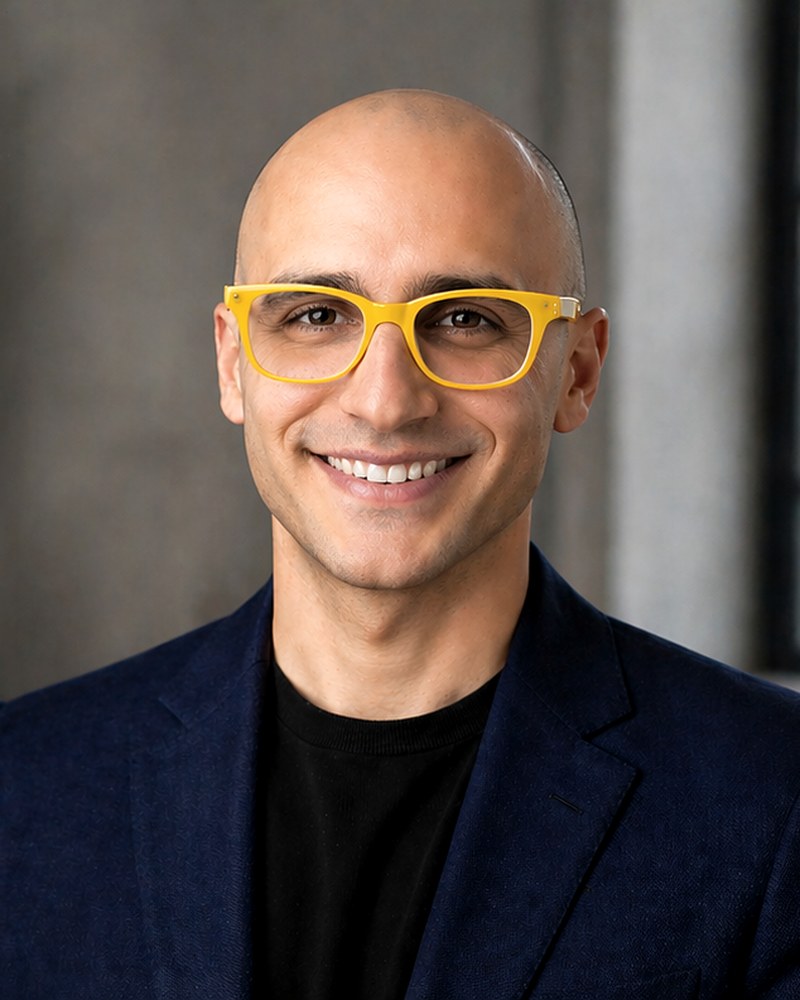
Iman Abrishamchi is an organisational behaviour practitioner and executive coach with more than fifteen years inside organisations across Europe, the Middle East and North America, working in Persian, English and Spanish. He is an ICF Master Certified Coach and credentialing assessor, holds an MBA and a DBA, and founded an accredited professional training institution. He is not an economist and does not present himself as one.
The Institute has no staff beyond the founder at present, no funders, and no board. Each will be named here when it exists, and not before.
How it works
- Every figure in the essays comes from a source checked on a live page; findings that have not been replicated are called unreplicated in the text.
- Composite scenarios drawn from advisory work are labelled as composite.
- No funding is accepted from an AI vendor for work that evaluates that vendor's products.
- Generative AI tools are used in research and drafting; the arguments and final text are the author's.